
If you cook from US recipes, you’ve probably run into the same issue: ingredients are listed in cups and spoons, but you prefer grams for consistent results.
That’s especially true for desserts and cream-based treats like Cheesecake Mousse, where small measurement differences can change texture.
The easiest solution is an ingredient-based cooking measurement converter
that estimates grams based on what you’re measuring (flour vs sugar vs butter).
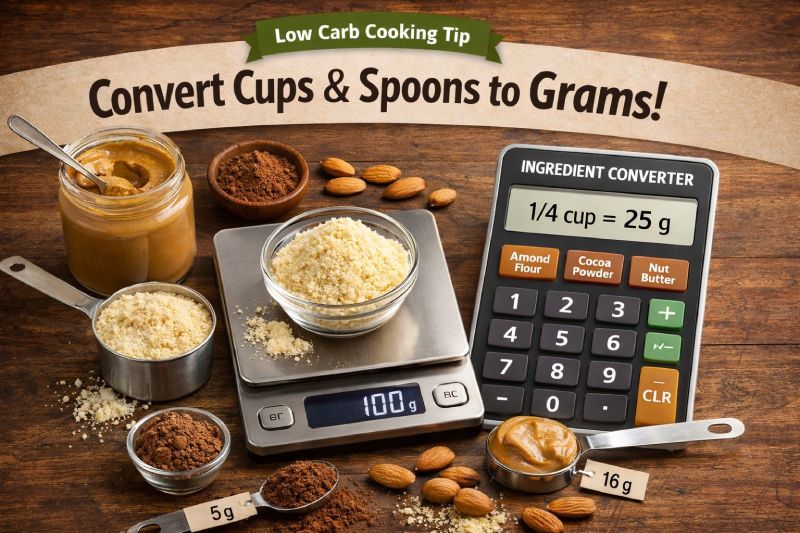
Why ingredient-based? Because a cup is volume, not weight. A “cup of flour” and a “cup of sugar” can weigh very differently,
and even the same ingredient changes depending on brand, humidity, and whether you scoop-and-pack or spoon-and-level.
So the numbers below are practical averages—ideal for everyday baking.
Quick baking chart: the most common conversions (approximate)
Use this as a fast reference. For exact custom amounts (like 0.5 cup, 1.5 cups, 3 tbsp, etc.), use the calculator links.
| Ingredient | 1 cup ≈ grams | Fast link |
|---|---|---|
| All-purpose flour | ≈ 120 g | 1 cup flour to grams |
| Granulated sugar | ≈ 200 g | 1 cup sugar to grams |
| Butter | ≈ 227 g per cup (≈ 14 g per tbsp) | 1 tbsp butter to grams |
Tip: butter is a perfect “spoon ingredient.” A tablespoon is roughly 14 grams, so it’s easy to scale recipes without guessing.
Cups, tablespoons, teaspoons: what changes (and what doesn’t)
- Volume → Weight (cups/tbsp/tsp → grams/oz): depends on ingredient density and packing.
- Volume → Volume (cups → ml, ml → fl oz): fixed conversion (same for every ingredient).
For example, a US cup is about 236.6 ml. If you only need volume conversion, use:
cups to milliliters.
Important: oz (weight) vs fl oz (volume)
One of the most common kitchen mistakes is mixing up ounces (oz) and fluid ounces (fl oz).
“Oz” measures weight; “fl oz” measures volume. When people convert milliliters, they often mean fl oz,
but sometimes they need weight (ingredient-based).
- For volume: ml to fl oz
- For weight (ingredient-based): 100 ml milk to oz (weight)
Practical examples from SugarFreeChic recipes
1) Cocoa clumps and spoon accuracy
In recipes like Hot Chocolate, cocoa can clump and compact.
Measuring cocoa by grams keeps flavor and texture consistent—especially when you repeat the recipe.
If you need a quick deep conversion page for spoons:
1 tbsp cocoa to grams.
2) Custards and cream-based desserts
For smooth textures in custards and ice cream bases (see
Vanilla Custard Ice Cream),
weight-based measuring is the easiest way to keep batches consistent, especially when scaling up.
How to convert a recipe from cups to grams (simple workflow)
- Identify the ingredient (flour, sugar, butter, cocoa, etc.).
- Pick the unit (cup, tbsp, tsp, ml).
- Convert using an ingredient-based calculator to get a practical gram estimate.
- Write the gram values into your recipe so you don’t need to reconvert next time.
Want one screen for all conversions (cups ↔ grams ↔ ml ↔ oz)?
Open the BakeMetric converter.
FAQ
Is “cups to grams” exact?
Not always. It’s usually an estimate because density varies by brand, humidity, and packing method.
But converting to grams still dramatically improves repeatability in baking.
What’s the biggest mistake with flour?
Packing the cup. If you scoop flour directly and compress it, the same “1 cup” can weigh much more than spoon-and-level.
More low-carb desserts on SugarFreeChic
- Dessert recipes (browse all)
- Say Cheese! (classic cheesecake)
- Strawberry Cheesecake
Bottom line
If you want repeatable baking results, converting cups and spoons to grams is one of the highest-impact upgrades you can make.
Start with the most common ingredients (flour, sugar, butter), then use an ingredient-based tool whenever you cook from US recipes.
Quick start:
open the full converter.

 Loading...